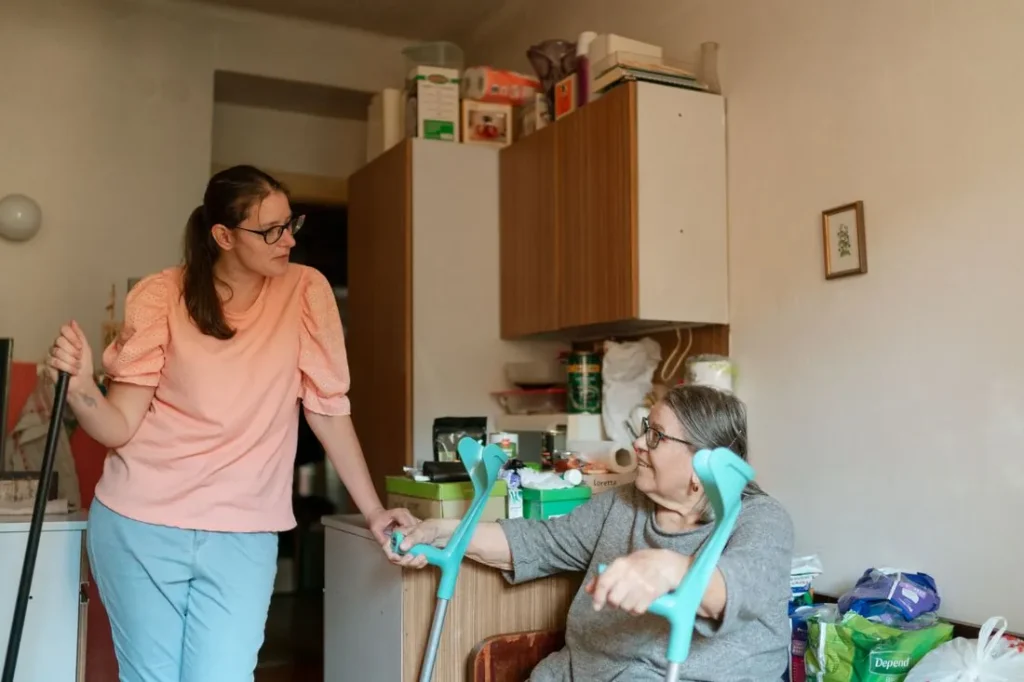
Changes are not always dramatic. You may notice several small things during visits or phone calls: an emptier fridge, unopened post, missed plans or a home that feels less cared for than usual. One sign on its own may have a simple explanation. A pattern, or a change from your parent’s normal habits, deserves a calm conversation.
What are the signs an elderly parent needs help at home?
-
Everyday tasks are becoming difficult
Laundry, washing up, shopping or changing the bed may be left undone. Look for a change from what is normal for your parent rather than expecting a perfectly tidy home.
-
Meals are being skipped
The fridge may contain little fresh food, meals may be left untouched, or your parent may rely on snacks because cooking now feels tiring or difficult.
-
Personal care has changed
You might notice unwashed clothes, difficulty bathing, or that grooming routines are being missed. Approach the subject gently and protect your parent’s dignity.
-
Medication routines are being missed
Unopened packs, forgotten doses or uncertainty about timings can suggest that reminders or practical support would help. A pharmacist or GP can answer questions about medicines.
-
There have been falls or near falls
New bruises, unsteadiness, holding onto furniture or avoiding the stairs may point to a need for a home safety review and professional advice.
-
The home is becoming unsafe
Burnt pans, appliances left on, spoiled food, cluttered walkways or doors left unlocked can increase everyday risk.
-
They are withdrawing from other people
Your parent may stop seeing friends, attending activities or answering calls. Companionship and practical help with getting out can make connection easier.
-
Money and post are becoming hard to manage
Unopened letters, missed bills or unusual purchases may show that paperwork has become overwhelming. Talk before stepping in and involve your parent in every decision.
-
Mobility around the home has changed
Difficulty getting in and out of a chair, using the bathroom or moving between rooms may mean the home setup or daily support needs reviewing.
-
You are increasingly worried between visits
If family members are making frequent emergency trips, rearranging work or feeling constantly on alert, a regular care plan may help both your parent and the wider family.
Sudden confusion, severe weakness, breathing difficulty or an injury after a fall should not be treated as a routine care issue. Seek urgent medical advice. Call 999 in an emergency or NHS 111 when you need urgent guidance and it is not an emergency.
When should I get help for my elderly parent?
Consider arranging help when changes begin to affect safety, nutrition, personal care, medication routines or your parent’s ability to enjoy daily life. You do not have to wait for a crisis. Starting with a small amount of support can make the transition feel more manageable.
Speak with your parent’s GP if there is a new or unexplained change in memory, mood, mobility, appetite or general health. A care provider can support daily living, but should not diagnose the reason for a change.
How to start a conversation about care with an elderly parent
Choose a quiet time and begin with what you have noticed, not what you think your parent can no longer do. Try: “I noticed the stairs have been difficult lately. What would make things easier?”
Listen to what matters most to them. They may care deeply about keeping a familiar routine, choosing who visits or staying in control of personal tasks. Offer choices and discuss one concern at a time.
If the first conversation does not go well, pause and return to it later. A GP, trusted relative or care professional may help your parent explore options without feeling pressured.
What does home care include in the UK?
Home care, also called domiciliary care, is support delivered in a person’s own home. The right plan depends on the person and may include:
- Companionship and help to stay socially connected
- Personal care such as washing, dressing and grooming
- Meal preparation and support with familiar routines
- Medication reminders in line with the agreed care plan
- Light housekeeping and help with everyday tasks
- Respite care so family caregivers can take a break
Some people begin with one or two visits a week. Others need daily visits or longer periods of support. A care assessment should consider preferences, abilities, risks and the routines your parent wants to keep.
How much does home care cost in the UK and is funding available?
Home care costs vary by location, the length and timing of visits, and the level of support required. Ask providers for a written explanation of their rates, minimum visit length, weekend or bank holiday charges, and what is included.
Your parent can ask their local council’s adult social care team for a care needs assessment. The assessment looks at what support may be needed. If the council identifies eligible needs, it may then complete a financial assessment to decide whether the council will contribute and how much your parent may need to pay.
Funding rules differ across England, Scotland, Wales and Northern Ireland. Depending on circumstances, it may also be worth asking about NHS Continuing Healthcare, Attendance Allowance, help for carers and local support services. An independent benefits adviser or the relevant local authority can explain current eligibility without requiring you to guess.
Frequently asked questions about help for elderly parents
How do I know if my elderly parent needs help?
Look for changes from their usual routines across several areas, such as meals, medication, personal care, mobility, household safety and social contact. A pattern matters more than one difficult day.
Can an elderly parent refuse help at home?
Adults are generally entitled to make their own decisions when they have the capacity to do so. Listen to their concerns, offer choices and focus on the support that protects what they value. Seek professional advice if you are worried about their ability to understand a specific decision or about immediate safety.
What is the difference between home care and a care home?
Home care brings agreed support to the person’s own home. A care home provides accommodation and care in a shared residential setting. The right option depends on needs, preferences, safety and the amount of support required.
How do I arrange a care needs assessment in the UK?
Contact the adult social care department of your parent’s local council and ask for a care needs assessment. In Scotland, Wales or Northern Ireland, contact the relevant local authority or health and social care service for the area.
What should I ask a home care provider?
Ask how care is assessed, how carers are matched, what happens if a regular carer is unavailable, how concerns are reported, what the full charges are and how the plan is reviewed when needs change.
Talk through the next step
If you are concerned about an elderly parent and would like to discuss companionship, personal care, respite care or practical support at home, contact Innovez Life Care for a warm, no pressure conversation.